Minnesota is the only state in the U.S. that licenses and regulates the otherwise federally unregulated precious metals industry and Miles Franklin is proud to be fully compliant.
Through our own and third-party tracking technologies, we collect and share with third parties electronic network activity, personal identifiers and information about your communications with us to allow the website to function, prevent fraud, store preferences, analyze usage, personalize experiences, improve services, measure ad performance, and offer targeted advertisements, which may be deemed a sale/share in some states. For more information, you may visit our privacy policy.
By clicking “I Agree”, you are agreeing to the terms of our privacy policy and terms of service.
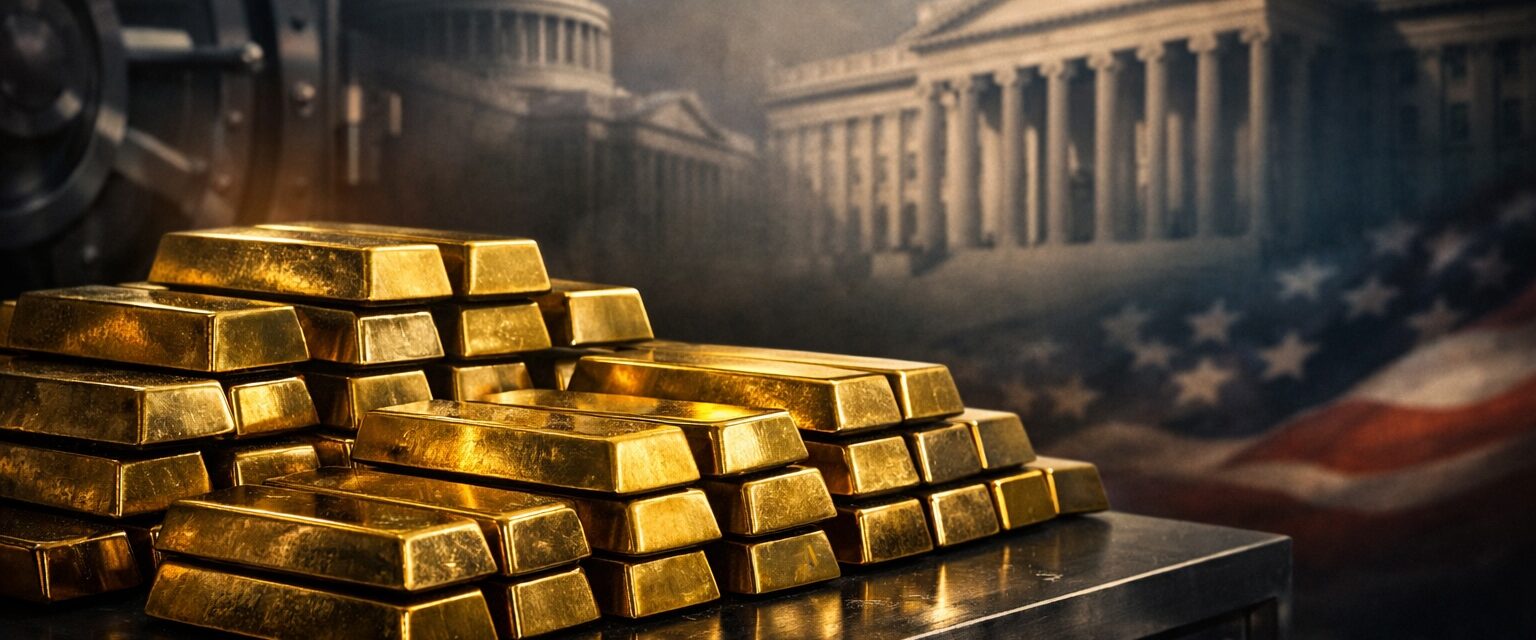
(Miles Franklin Media) – Representative Marlin Stutzman (R-Ind.) is calling for a full, independent audit of U.S. gold reserves and expressing support for the federal government accumulating more of the precious metal to bolster the dollar’s standing against global competitors.
Stutzman, a senior member of the House Financial Services Committee, noted that the last comprehensive audit of the nation’s gold at Fort Knox and other facilities occurred in the 1950s. He expressed support for the Gold Reserve Transparency Act, an initiative aimed at verifying the existence and security of American holdings.
“Since the 1950s, we haven't done an audit. That's ridiculous,” Stutzman told Michelle Makori, President & Editor-in-Chief, Miles Franklin Media, emphasizing that transparency is essential for maintaining the public’s confidence in federal institutions. He characterized the move as a necessary step to “eliminate those walls of distrust” between the government and the American people.
The Indiana Republican’s push for an audit comes as central banks worldwide, led by China, purchase gold at record levels to insulate their economies from U.S. financial leverage. Stutzman argued that the U.S. should mirror this behavior to protect the value of the dollar as the national debt approaches $38.6 trillion.
When asked if the United States should be buying more gold, Stutzman responded, “Absolutely. A hundred percent.” He suggested that the U.S. should question the motives of adversaries increasing their holdings, stating, “Why are they doing that? That should be just the first question. Well, maybe it's because they realize the power that it has.”
Stutzman, who also operates a 4,000-acre farm, compared the value of gold to land as a reliable store of wealth. He voiced support for innovative financial instruments aimed at restoring confidence in U.S. debt, including a proposed 50-year Treasury bond convertible into gold.
The idea has been advanced by Judy Shelton, a former Federal Reserve Board nominee under President Trump and a longtime advocate of sound money principles. Shelton has suggested issuing a long-dated Treasury bond – potentially to coincide with the 250th anniversary of the United States in 2026. Proponents argue such a structure could strengthen demand for U.S. debt, reinforce monetary credibility, and signal a renewed commitment to fiscal discipline at a time of rising deficits and declining foreign appetite for Treasuries.
Stutzman indicated that proposals linking government debt to hard assets deserve serious consideration, particularly as global competitors increasingly treat gold as a strategic monetary reserve.
For Stutzman’s thoughts on auditing U.S. gold and the idea of a gold-convertible Treasury bond, watch the full interview above.
Resistance to Central Bank Digital Currencies
While advocating for a return to hard-asset backing, Stutzman is simultaneously leading efforts to block the implementation of a Federal Reserve-issued digital dollar. He has co-sponsored legislation, including the Digital Asset Market Clarity Act, which contains language prohibiting the Federal Reserve from offering retail products directly to individuals or using a Central Bank Digital Currency (CBDC) to implement monetary policy.
Stutzman warned that a CBDC could serve as a “financial surveillance tool” that grants the government unprecedented control over private transactions. He cited the 2022 freezing of bank accounts belonging to protesting truckers in Canada as a cautionary tale of potential government overreach.
“To give the government the sort of control – a switch that can turn off and turn on our checking accounts… should never be the case,” Stutzman said.
Despite the rise of CBDCs in 137 countries, including China’s digital yuan, Stutzman argued that the U.S. must take a different path to preserve its unique economic identity. He asserted that American power is rooted in private enterprise rather than state control.
“Our power is in the people. It's not in the government,” Stutzman said, concluding that a centralized digital system would give Washington “even more power than it already has.”
For Stutzman’s full comments, watch the interview above.