Minnesota is the only state in the U.S. that licenses and regulates the otherwise federally unregulated precious metals industry and Miles Franklin is proud to be fully compliant.
1. IRS Approval
Ensure the custodian is IRS approved to administer self-directed IRAs. Not all financial institutions qualify.
2. Experience with Precious Metals
Choose one that specializes in or has strong experience with precious metals IRAs. Traditional IRA custodians may not handle physical assets like gold or silver.
3. Fee Structure
Fees vary significantly:
4. Customer Service & Reputation
5. Buy/Sell Process

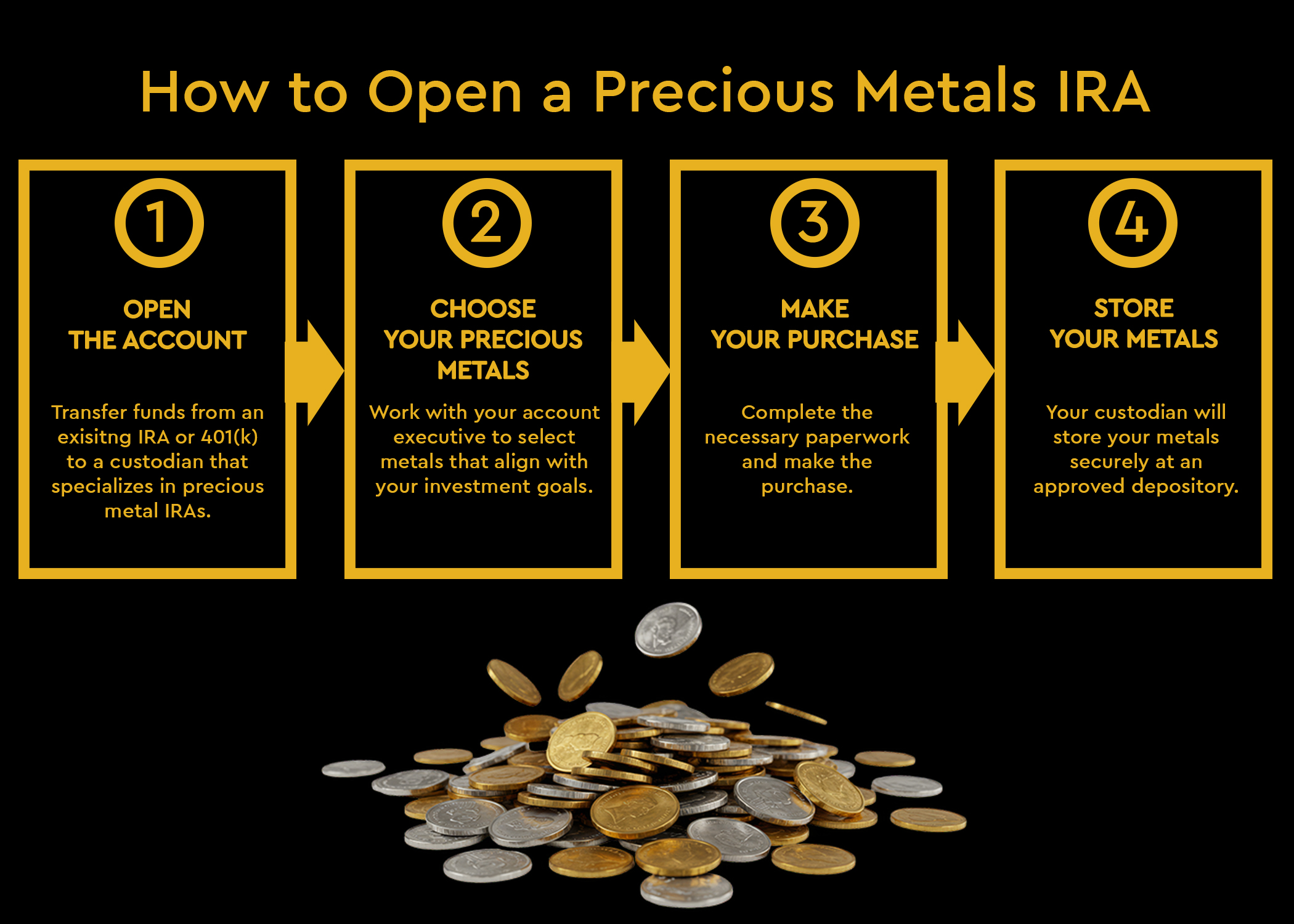
To preserve the tax-advantaged status of your retirement account while investing in precious metals, your assets must be stored at an approved precious metals depository. The IRS does not permit SDIRA holders to take personal possession of metals owned by their self-directed IRA.
When you purchase physical precious metals through a self-directed IRA, your IRA custodian doesn’t store the metals itself — it works with secure, IRS-approved third-party depositories that meet strict regulatory, insurance, and security requirements. When choosing a depository, several factors should be considered, including geographic location and the specific storage options each facility provides. You can choose between two primary storage options: allocated (non-segregated) or segregated storage.
Allocated storage—also called non-segregated or commingled storage—means your metals are stored alongside metals belonging to other investors. While you may not receive the exact same bars or coins you originally purchased, you are guaranteed metals of the same type, weight, and hallmark. Because this method is operationally simpler for the depository, it typically involves lower storage fees.
Segregated storage, by contrast, keeps your metals physically separate from those of other account holders. Although this option generally comes at a higher cost, it ensures that you receive the exact coins or bars originally purchased for your account. The specific metal you purchase will be tagged to your account, stored separately, and not mixed with other investors’ holdings. When you take a distribution (either in-kind or liquidated), you receive the exact same items originally purchased — same serial numbers, same coins, same bars.
1. IRS Approval
Only choose depositories that are IRS-approved to hold metals for IRAs.
2. Segregated vs. Non-Segregated Storage
3. Security & Insurance
Ensure the depository has:
4. Geographic Location
5. Transparency & Auditing
6. Reputation and Longevity
7. IRA Custodian Compatibility
Some depositories have exclusive relationships with IRA custodians. Confirm that your chosen IRA custodian works with the depository you’re considering.